Send a branch over any chat app
One person’s household travels as a small file: the partner, children and descendants. Ancestors stay behind unless you add them.
HomeFeatures
A family tree app built around the gaps in real families: relatives nobody can name, marriages that cross branches, and words English doesn’t have.
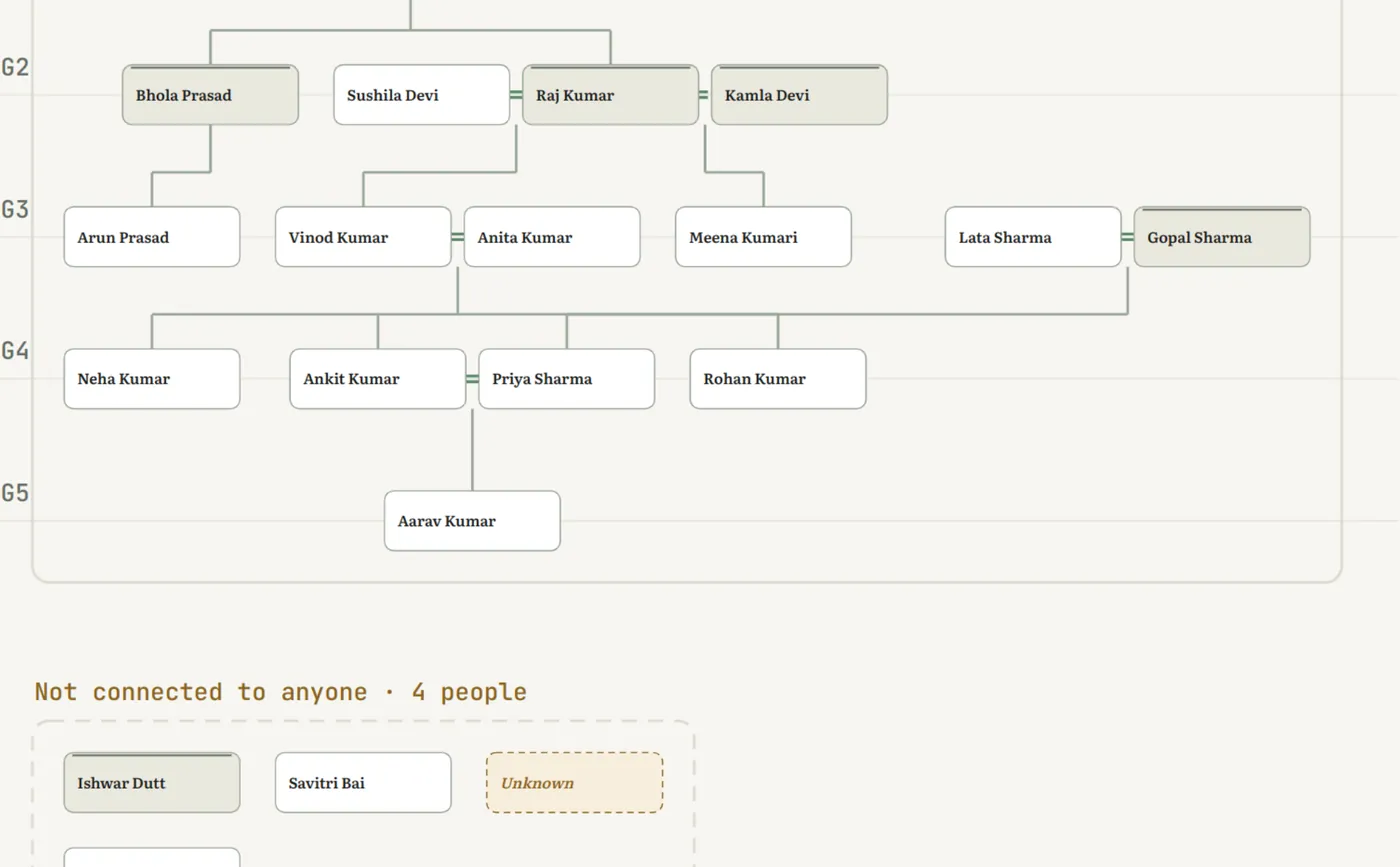
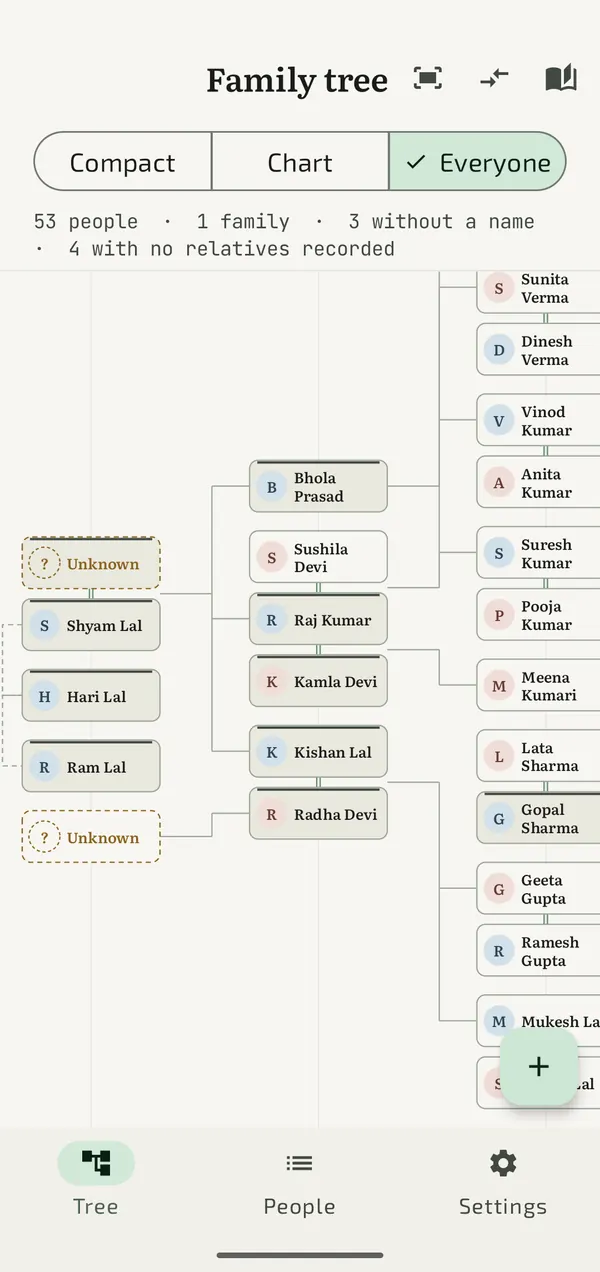
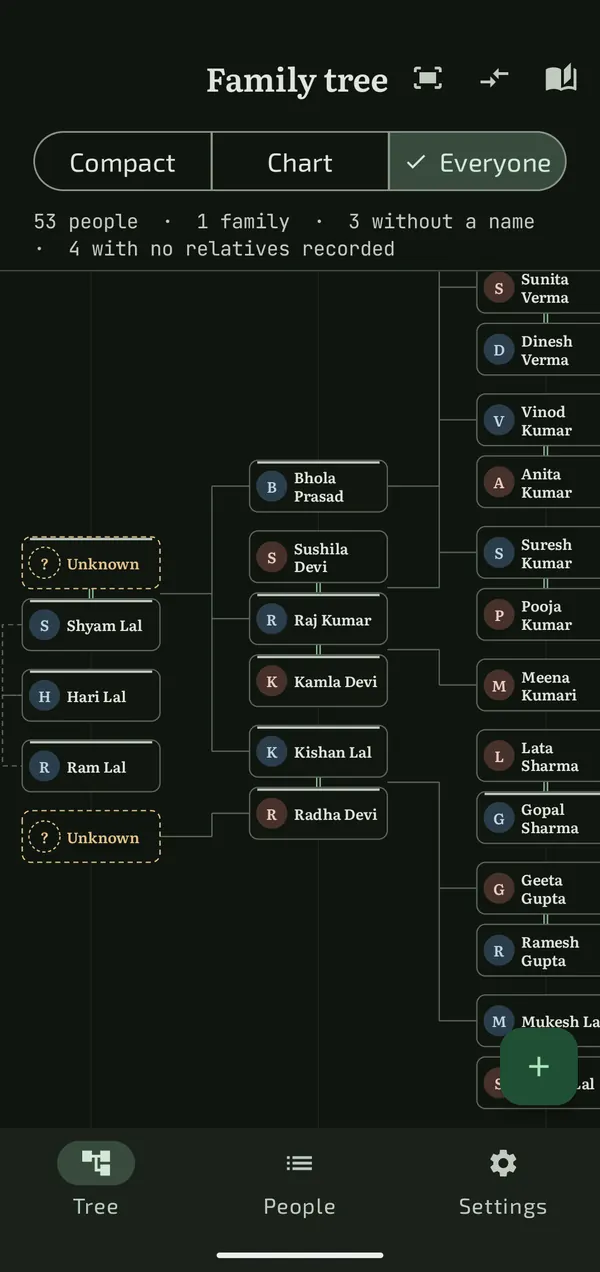
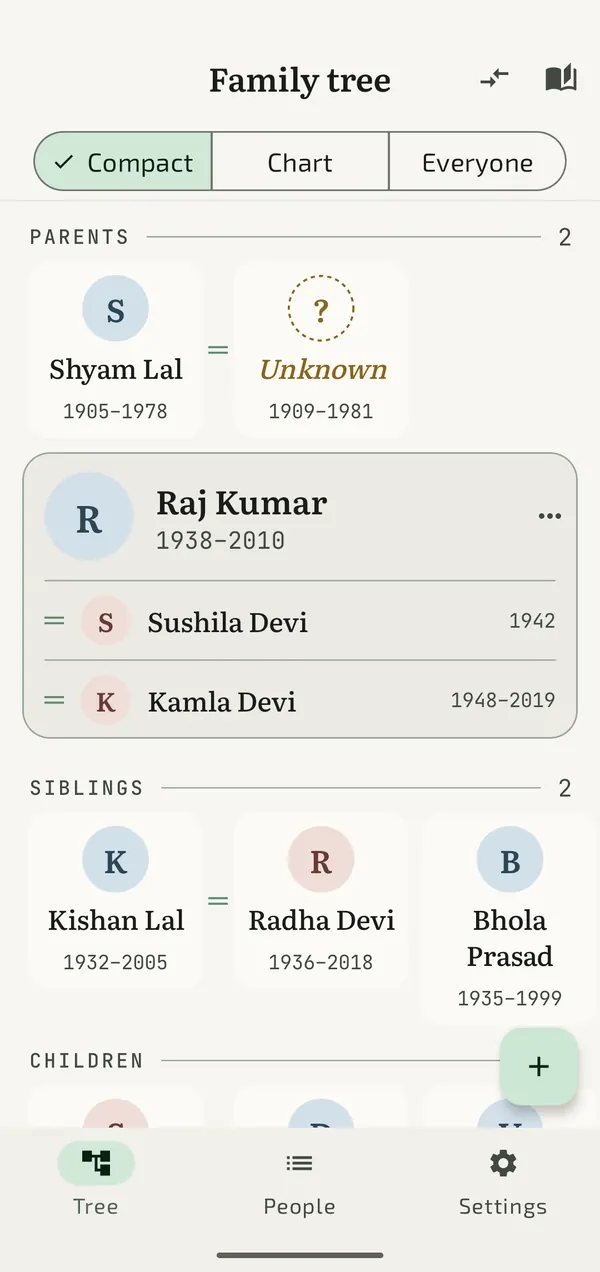
Every family has someone whose name nobody wrote down. In most apps you have to invent one or leave them out. In f-tree a person with no name is a valid person, drawn with a dashed brass edge so you can see where the record has holes.
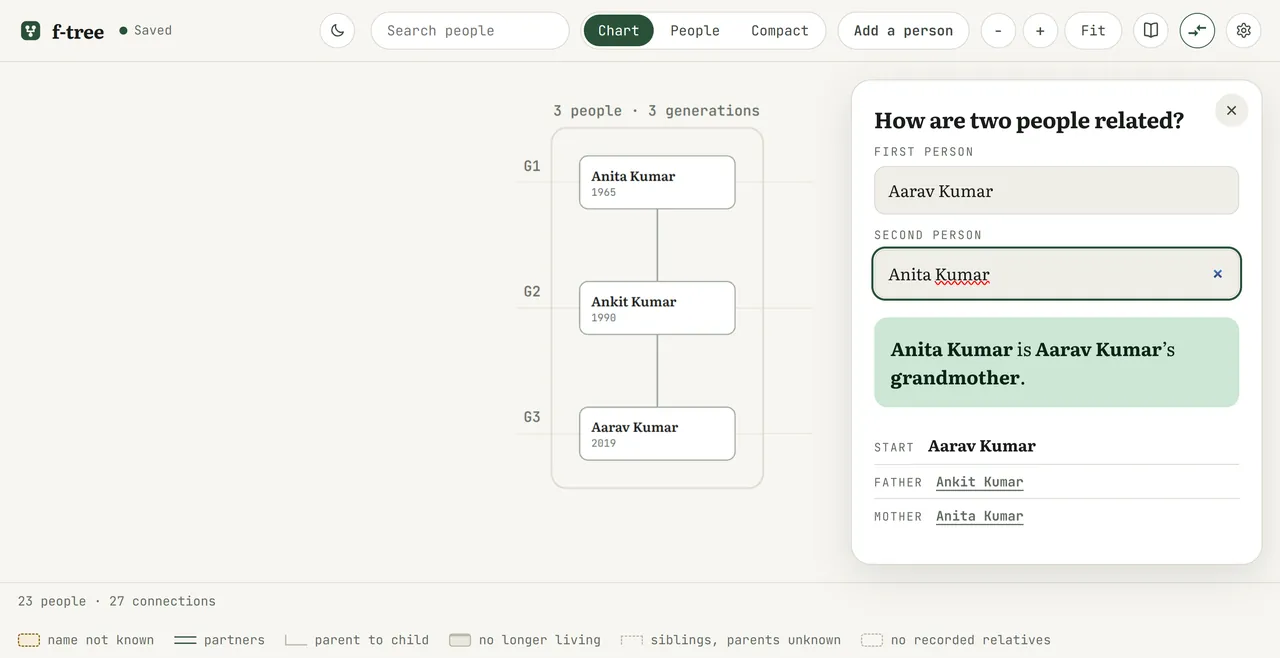
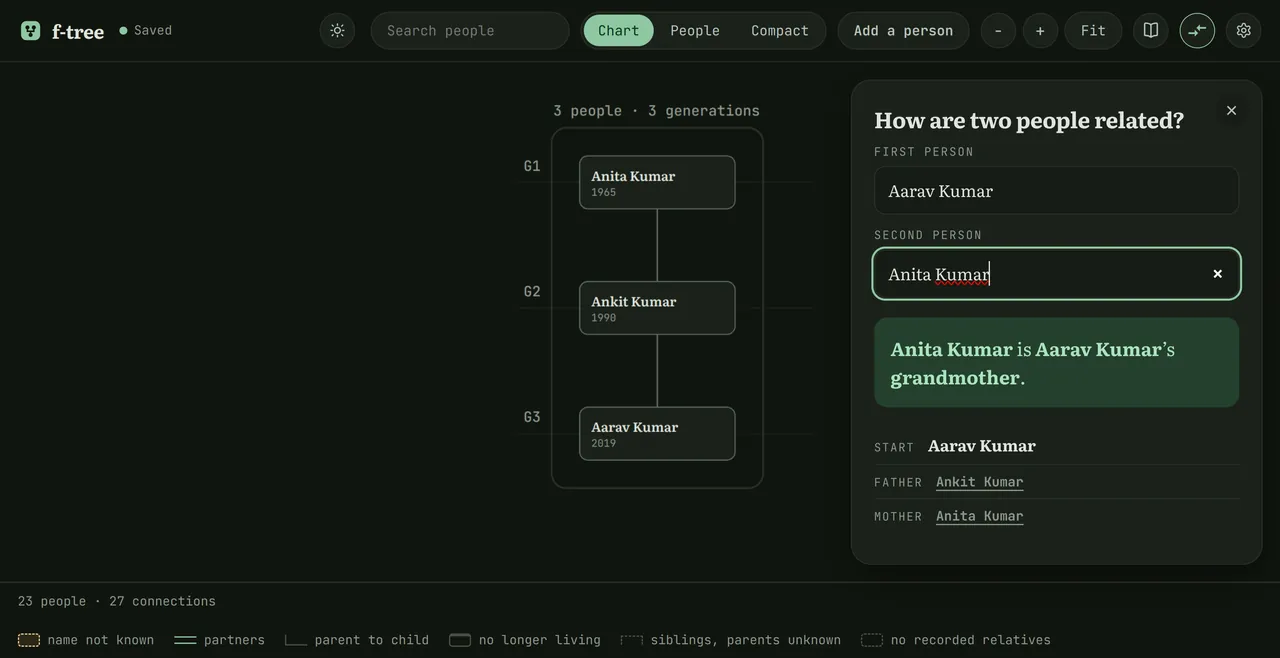
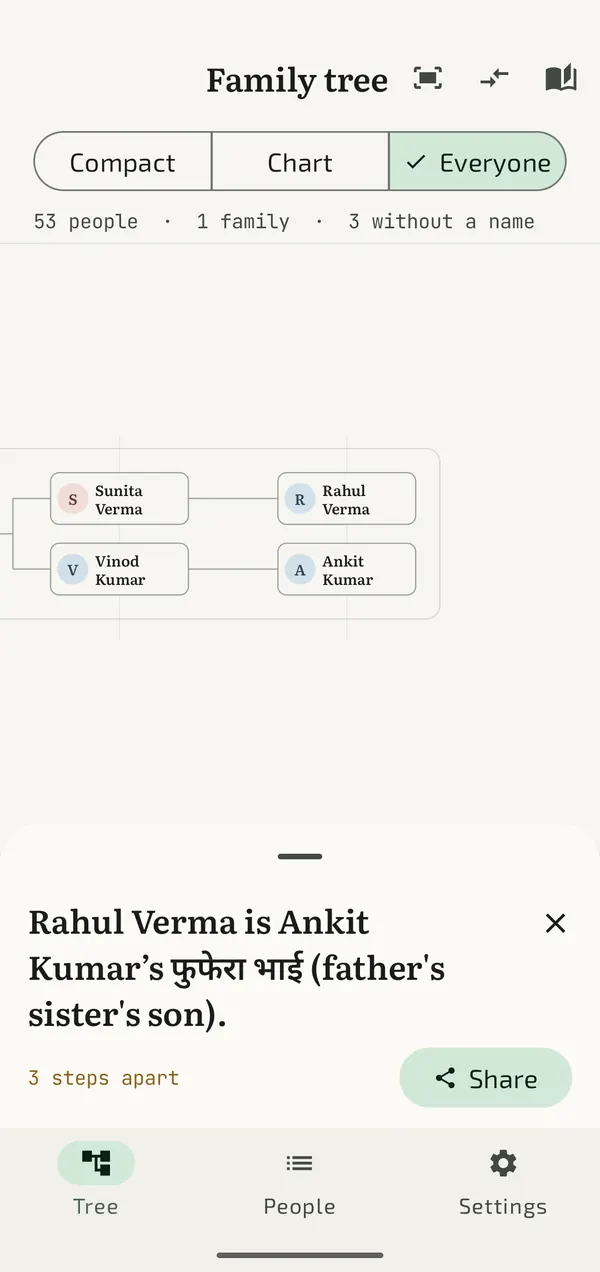
Choose two people and f-tree names the relationship, such as “first cousin once removed” or “mother-in-law”, and lists every person the line runs through. It walks marriages as well as blood relations, because “my wife’s mother” is what people actually ask.
If the file doesn’t connect two people it says exactly that, rather than inventing a link.
English has one word where Hindi has five. “Uncle” is चाचा, ताऊ, मामा, फूफा or मौसा depending on facts English throws away. Switch Family words to हिन्दी and f-tree chooses the right one from the side of the family, who links the two people, and who was born first.
When the record can’t say, it says पिता के भाई (father’s brother), which is true, rather than guessing between चाचा and ताऊ.
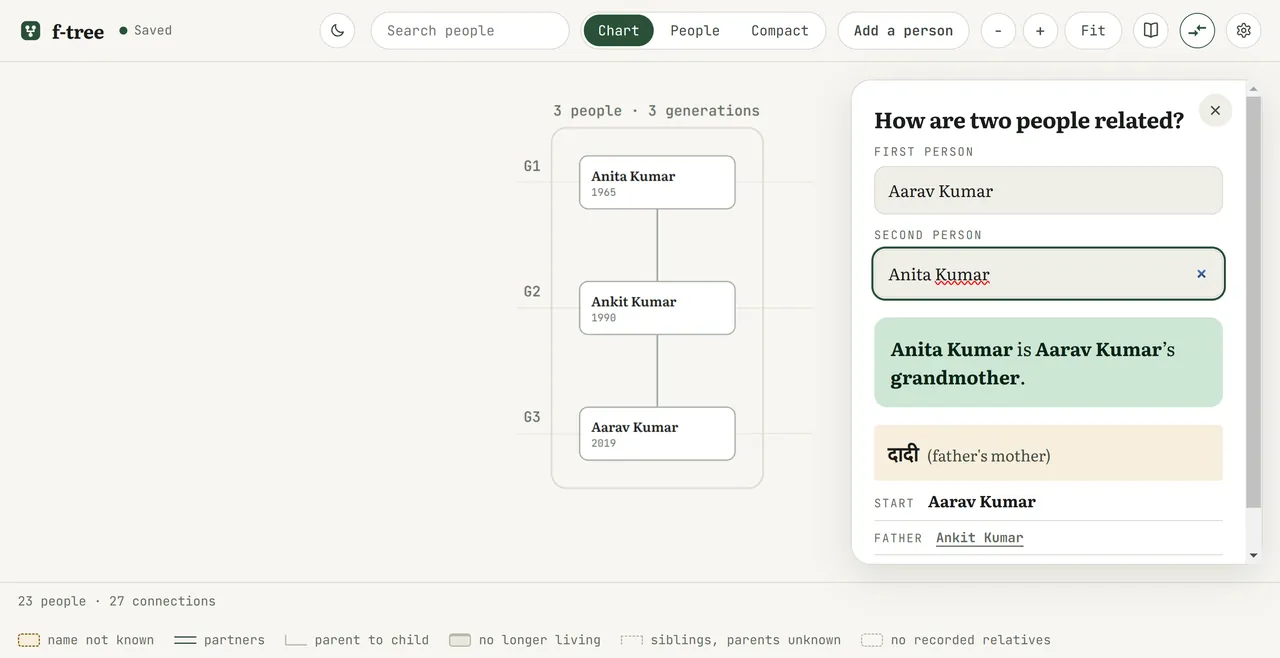
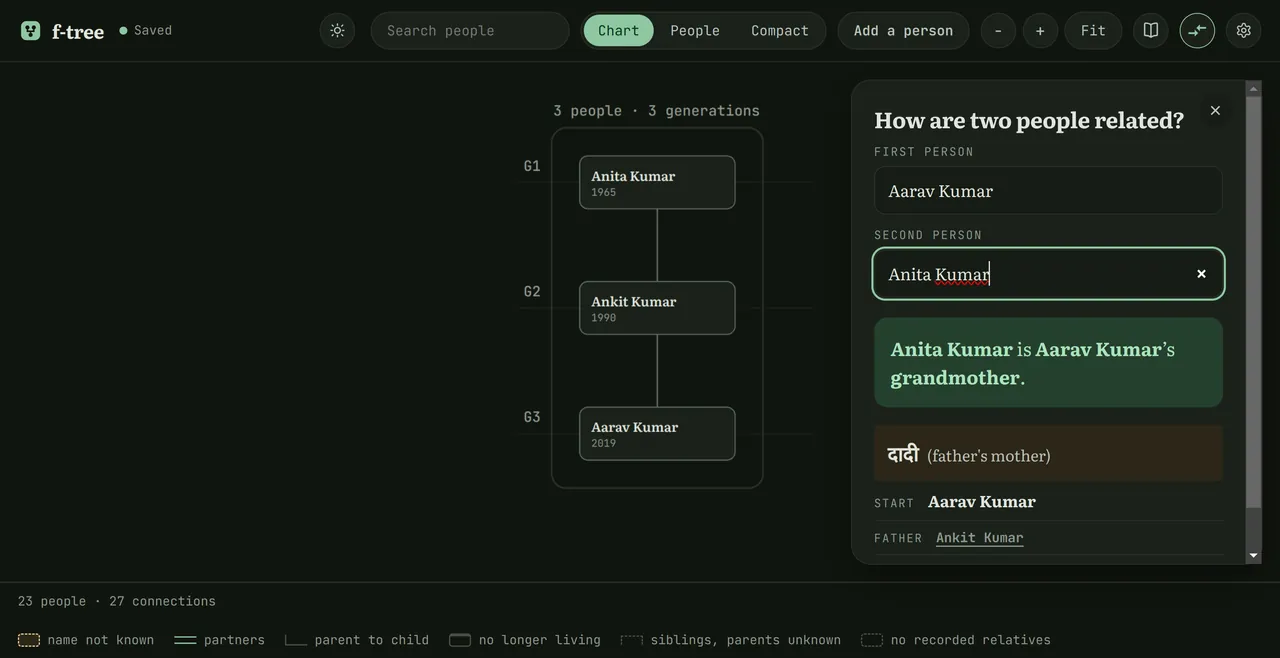
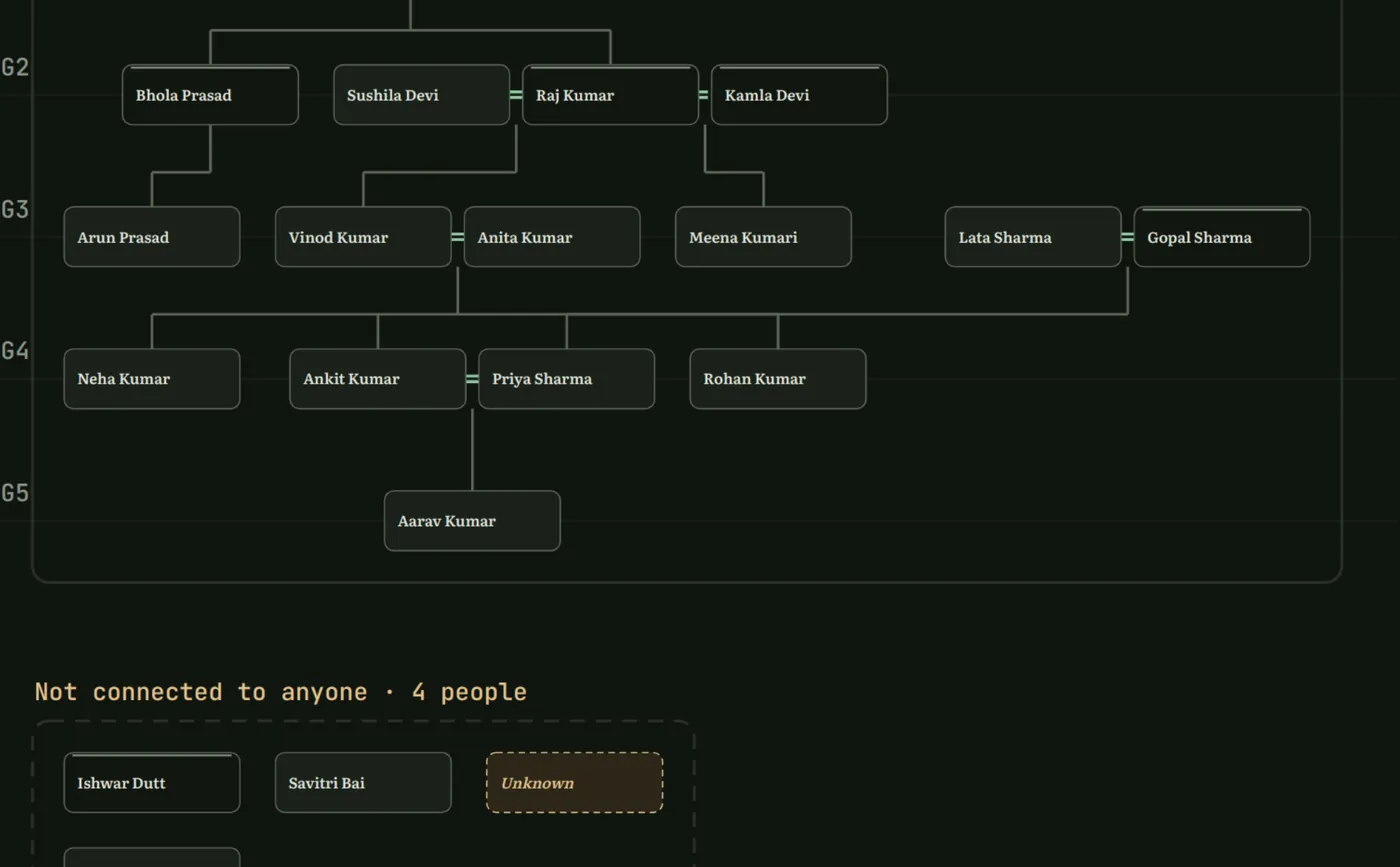
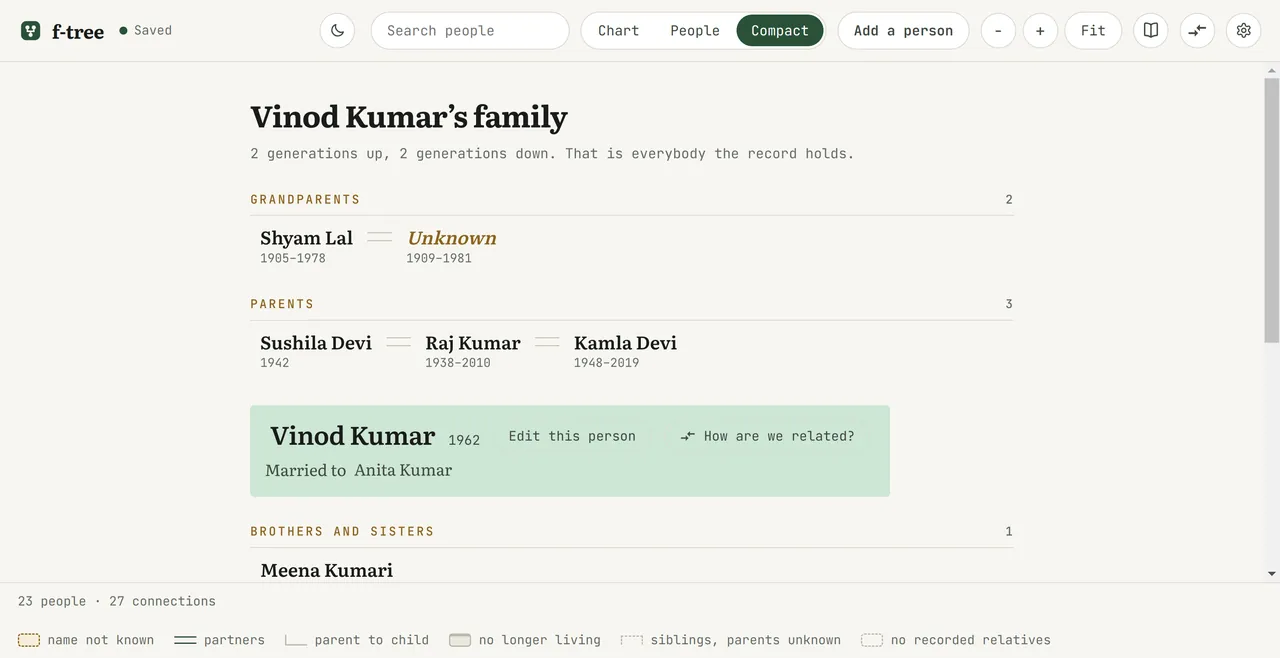
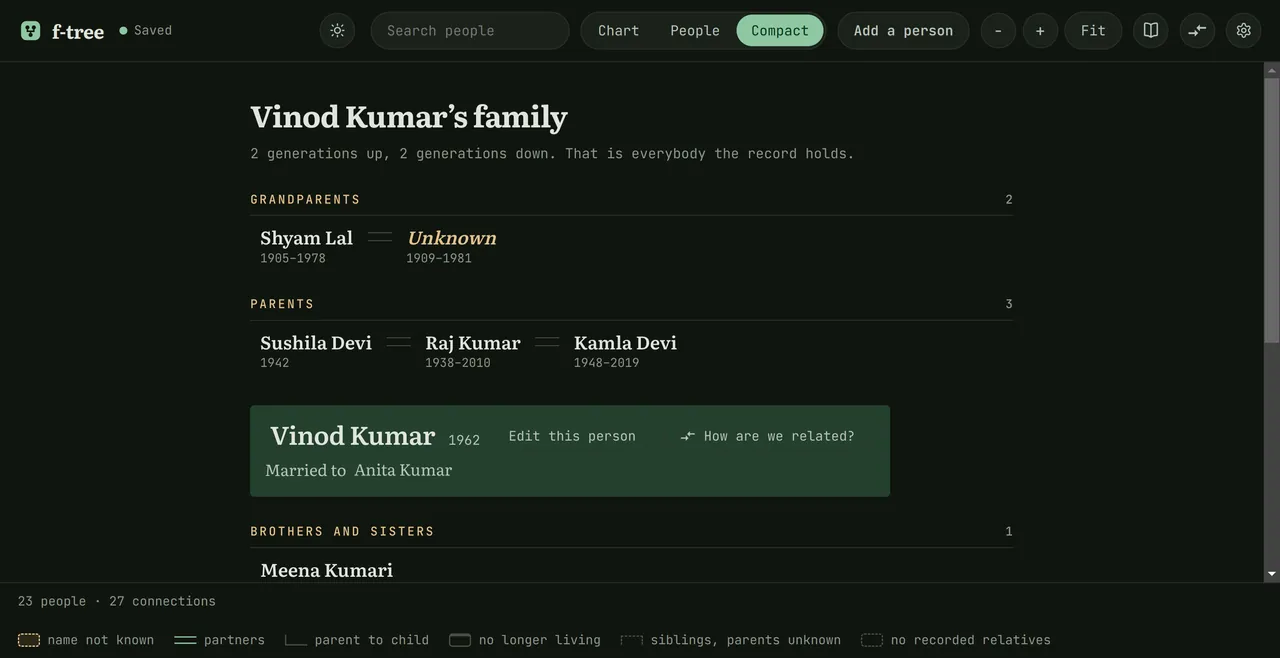
Chart draws the whole tree with generations as rows. People lists everybody by name, including the people no relationship reaches. Compact reads one person’s family as generation bands you can follow at any size, and a screen reader can read it too.
On Android the chart focuses on one person and their line, which suits a phone screen.
Send one person’s household as a small .ftree file over any chat app. When your cousin imports it, f-tree matches people rather than duplicating them and tells you what it will do before it does it: who is new, who is already there, and who might be the same person.
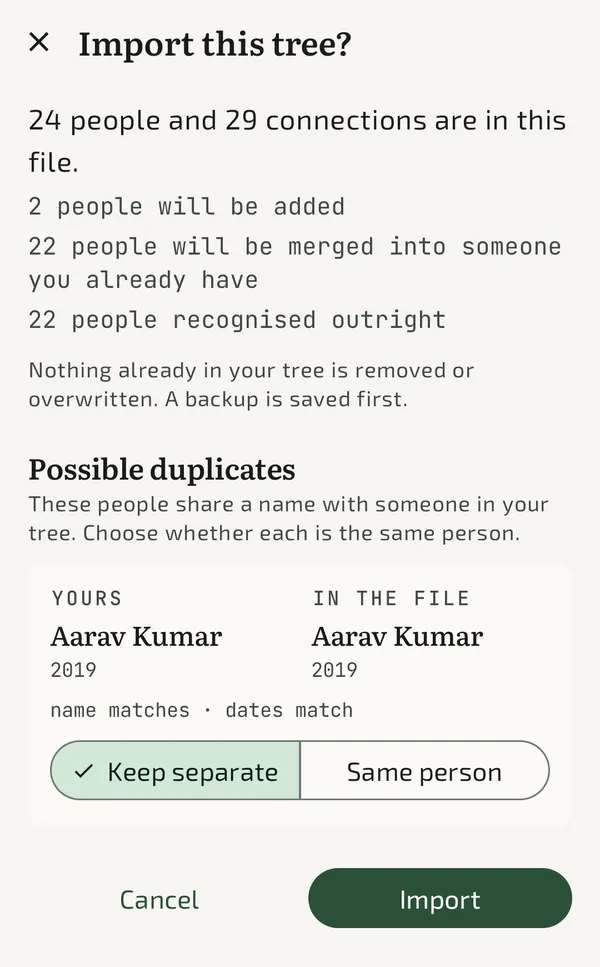
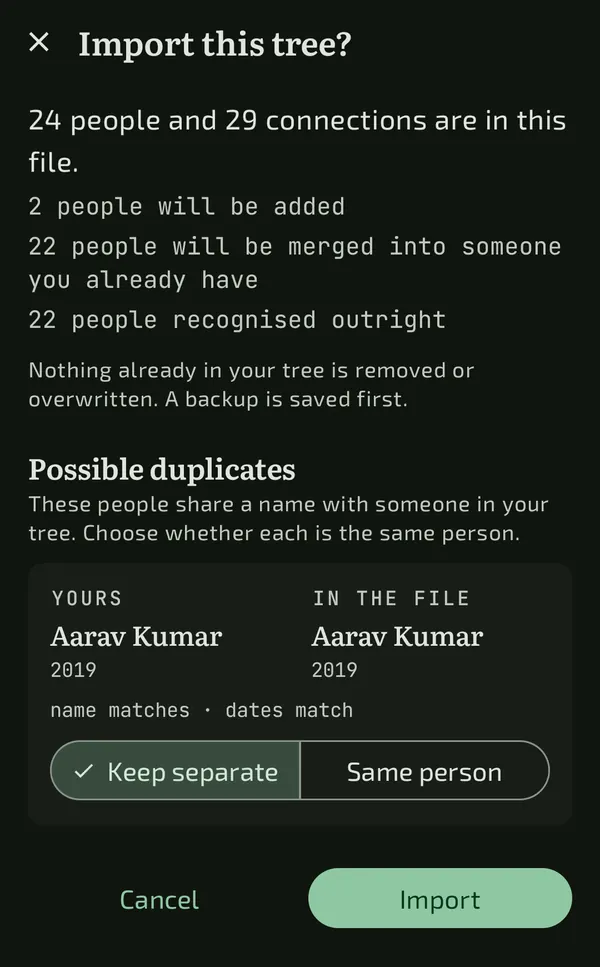
The Android app draws the same family in columns, one generation at a time, sized for a thumb.
The details that make a tree something you can keep for years.
One person’s household travels as a small file: the partner, children and descendants. Ancestors stay behind unless you add them.
Send a tree to a device you can see, over the Wi-Fi you’re both on, with no account and no server. Both screens show the same six digits so you know it reached the right one. It works between Android, Windows and Linux, and is off until you switch it on.
A “Coming up” list for the next 30 days with the age they turn, and a separate, quieter place to remember the departed. Reminders are off by default, and a locked screen shows only “A birthday today”.
A designed, printable PDF with a cover, everyone in the family and an index to find yourself in, made on your own device. Living people show only a birth year unless you say otherwise.
About the family bookAdd a photograph to anyone and frame it, rather than crop it. Click or tap to see the whole picture. Photos on the chart can be switched off.
On desktop every change reaches your file about a second later, written through a temporary file so a crash can’t leave half a tree. The last five versions are kept in the app’s own folder.
A .ftree is a ZIP holding a plain tree.json and your photos, documented in the repository. You can read your family without the app, and nobody can lock it away.
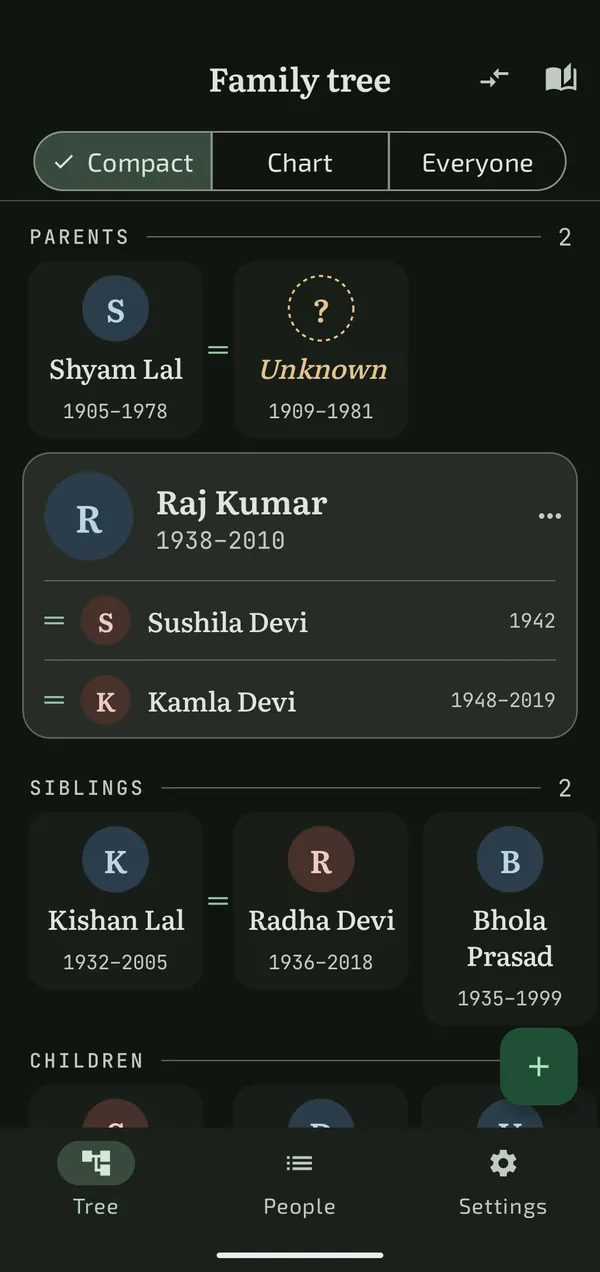
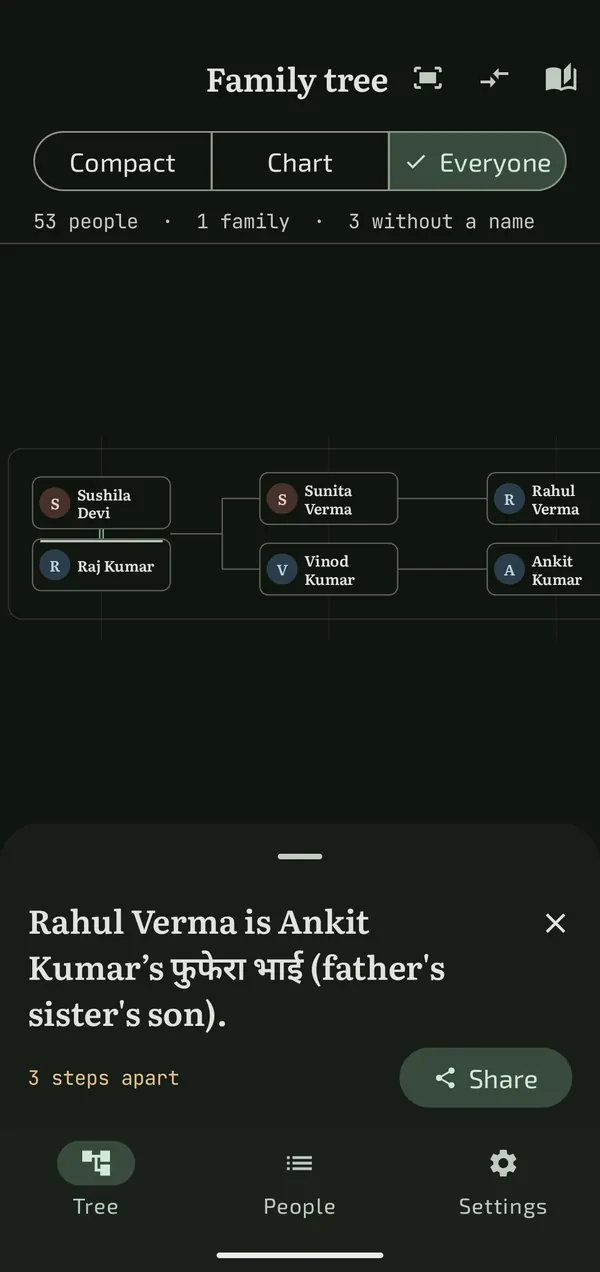
Follows your system, or switch it yourself. The same palette runs across Android, Windows, Linux and this site.
It’s free, it works offline, and you can start with a single name.